Skip to content
Roof Leak DetectionExeter · Devon and the South West

For an active leak

Find where it is actually getting in, before anyone lifts a tile

A visual pass and a radiometric thermal pass over the same roof, flown together, so the wet patch under the covering shows up before a single tile comes off to go looking for it.
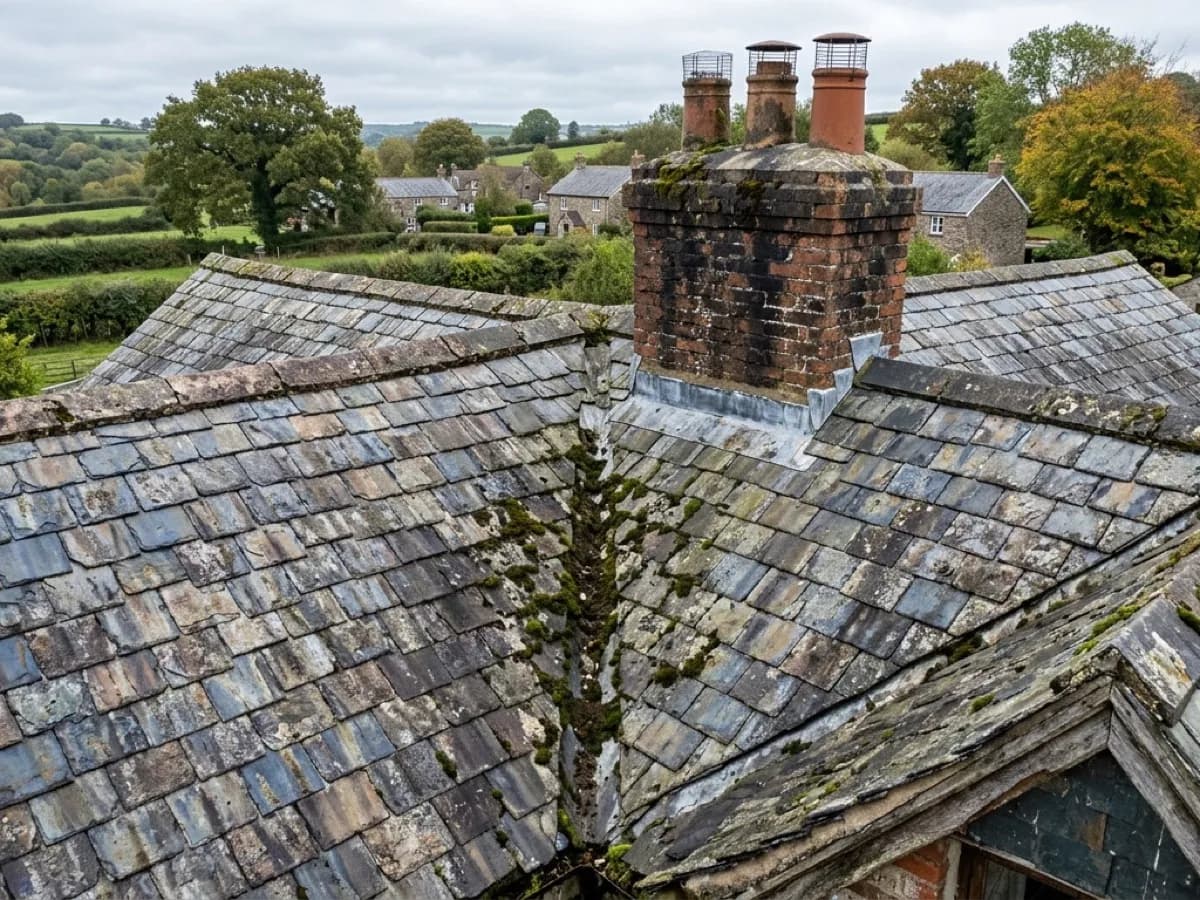
Aerial visual photograph of a Devon roof valley and chimney stack, the normal camera view before tracing begins
What you can see
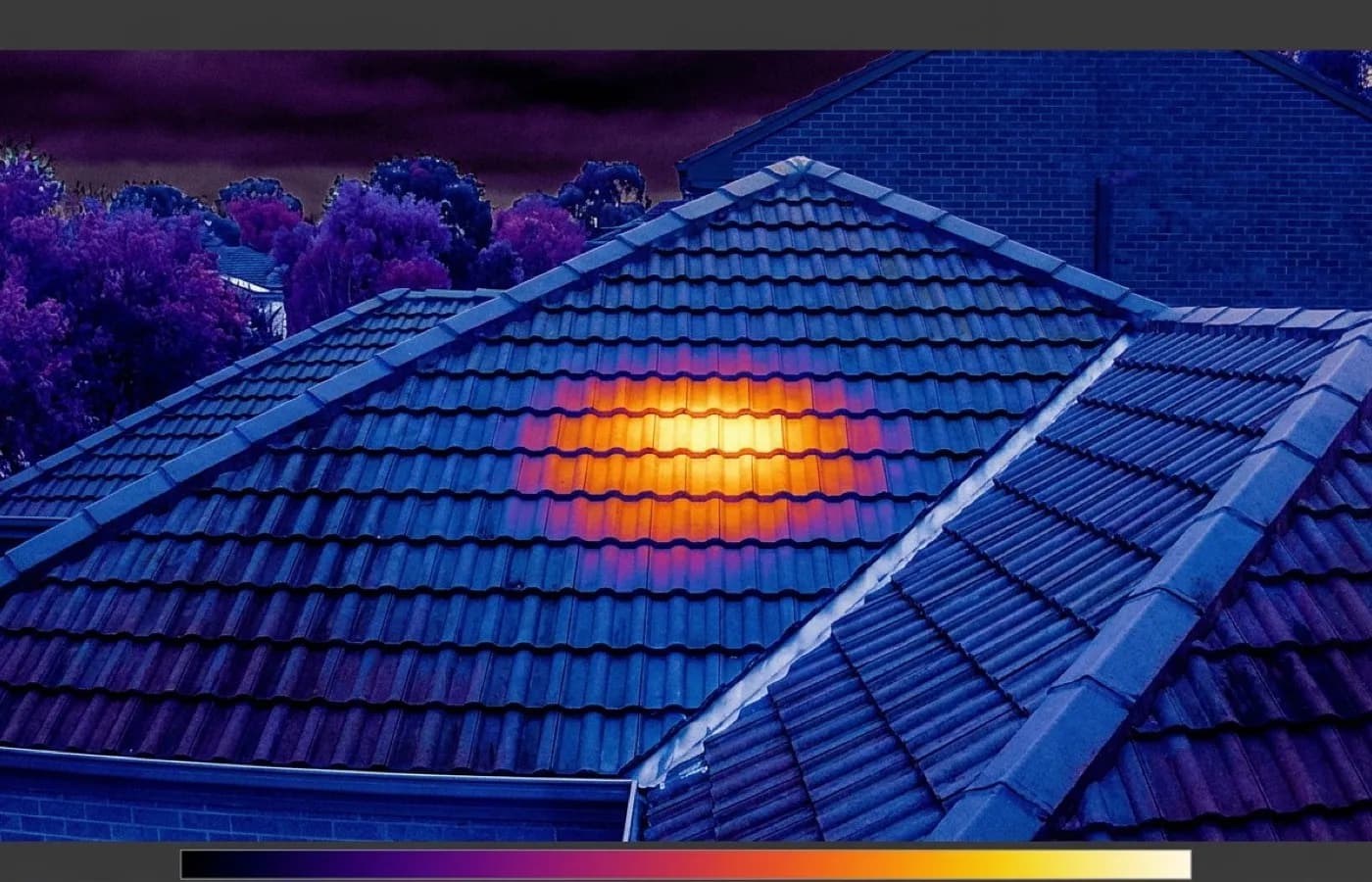
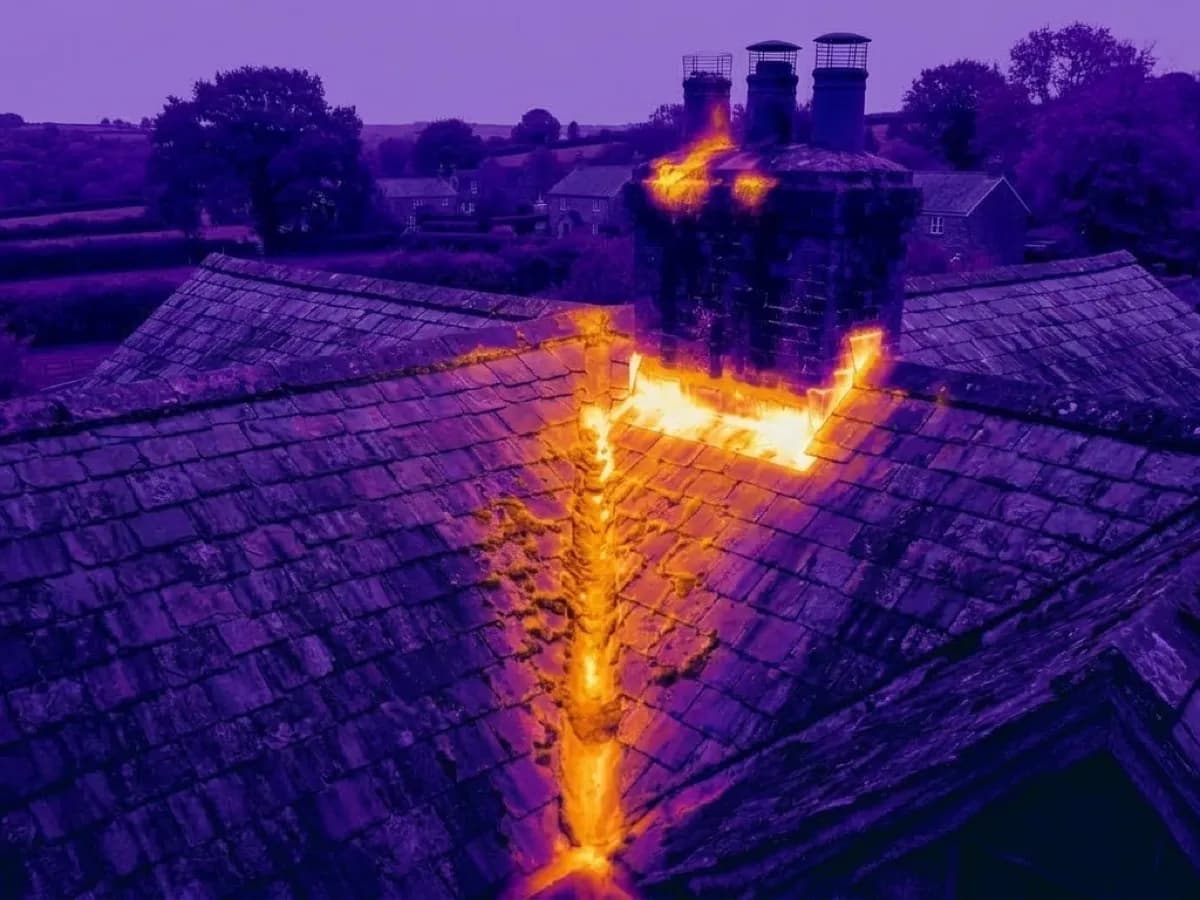
The same roof valley and stack rendered as a radiometric thermal image, showing a warmer patch where damp is holding heat differently to the dry slate around it
What the thermal camera sees
  • Thermal and visual flown together, not sold as two separate visits
  • No scaffolding, no ladders, nothing lifted or opened up to look
  • Fixed price agreed before the visit
  • Written report within 48 hours, addressed to your builder or agent if you want it

The actual problem

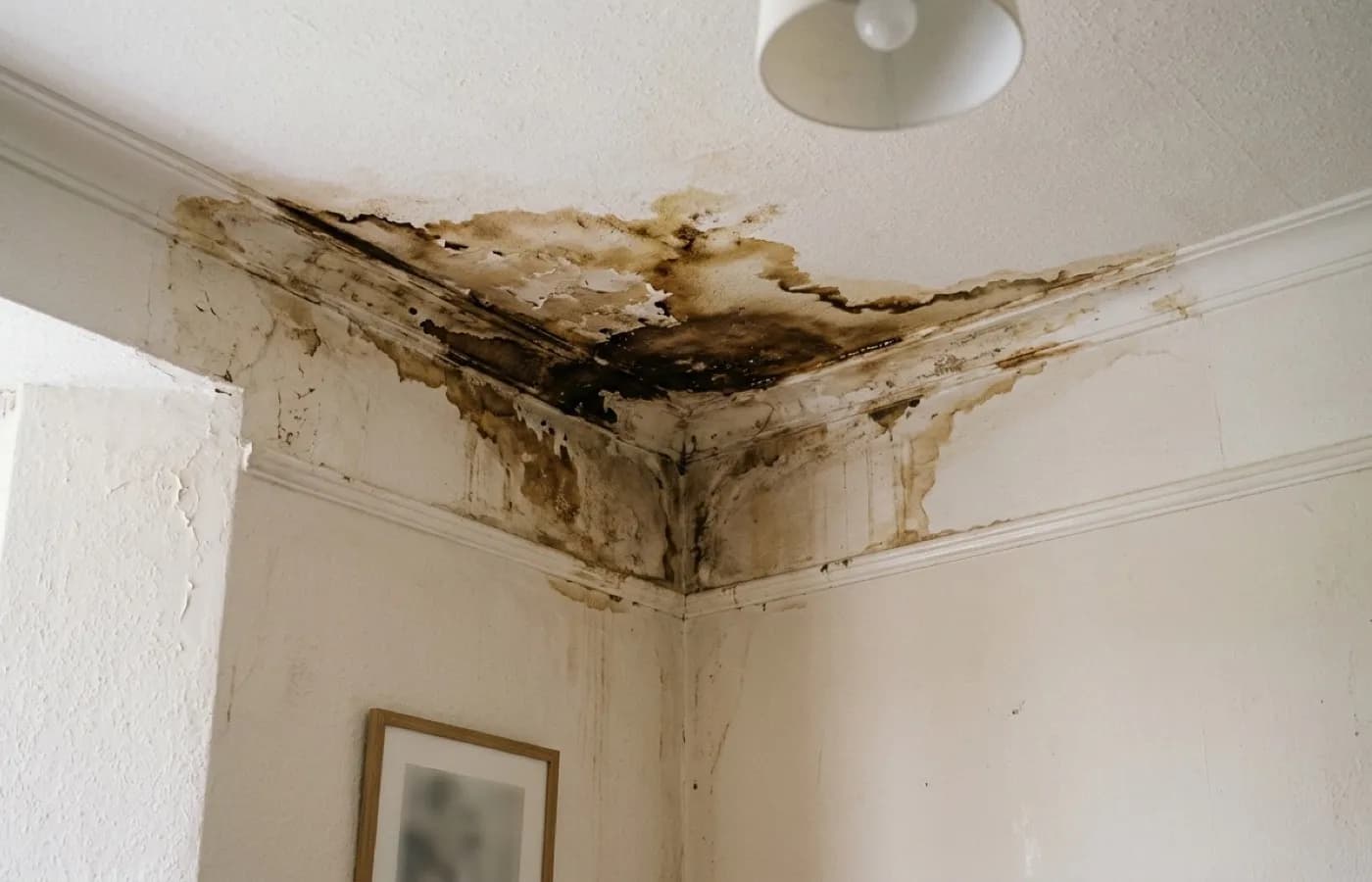
A ceiling stain tells you almost nothing about where the water got in

Water does not fall straight down through a roof. It tracks sideways under a covering, along a batten or a piece of felt, sometimes for a metre or more, before it ever finds a gap and shows itself as a stain on a ceiling. By the time anybody notices, the mark inside the house and the hole in the roof can be nowhere near each other.

That is normally where the guessing starts. One roofer thinks it is the chimney flashing, another thinks it is the valley, and short of lifting tiles at random and waiting for the next downpour, there has traditionally been no fast way to settle it. Meanwhile the water keeps finding its way in.

A flown trace looks at the whole roof twice, once with an ordinary camera and once with a thermal one, and compares the two. A wet patch under a covering often holds and loses heat differently to the dry roof around it, which narrows the search without anyone stripping a single tile to go looking.

What we fly

Two passes over the same roof, one report

The flying is much the same each time. What changes is who is reading the report at the end and what they need it to support.
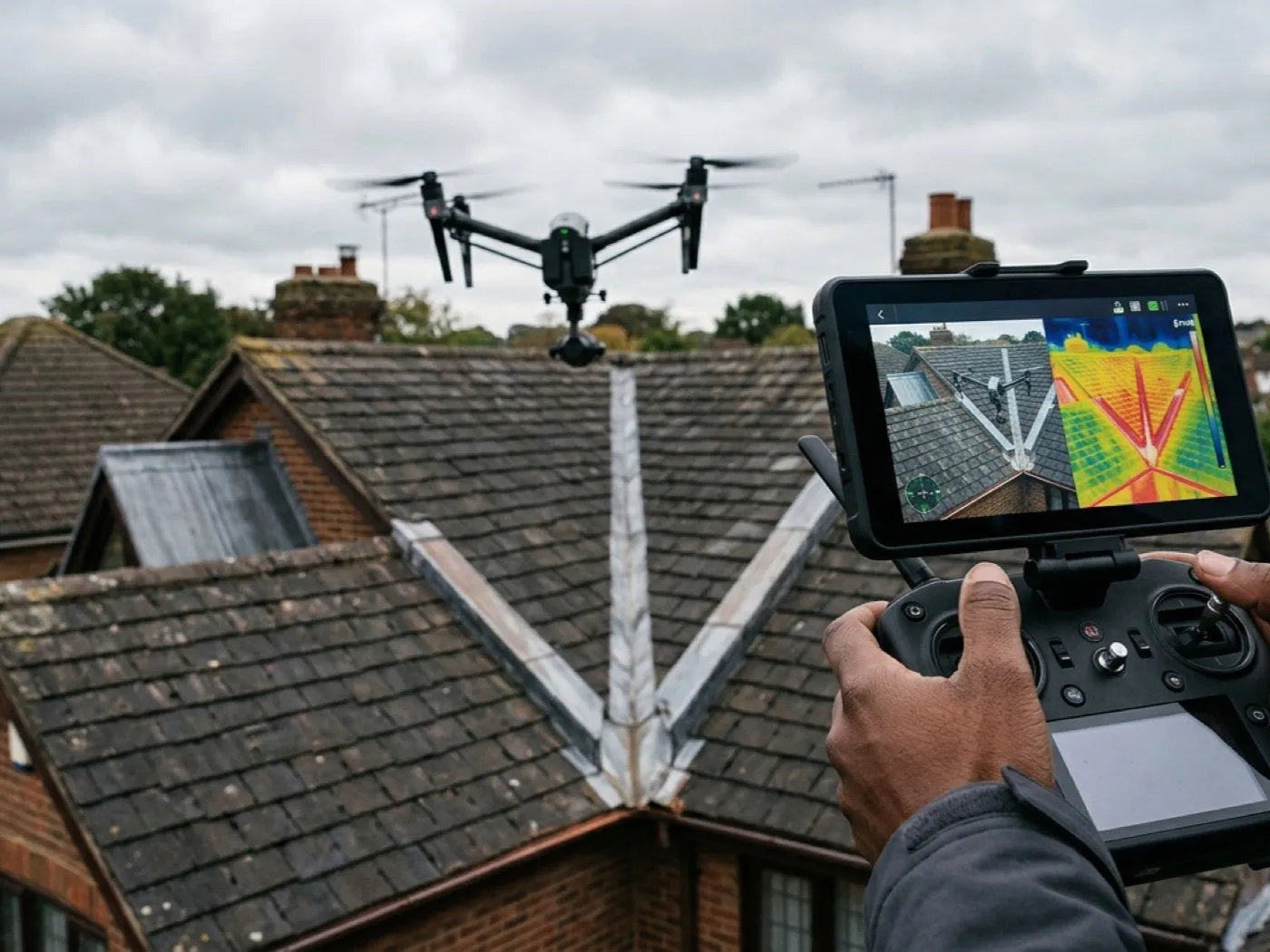
A drone hovering above a roof valley with a visual image and a thermal image of the same detail shown side by side on a controller screen

Leak Trace

A visual pass and a radiometric thermal pass over the same roof, compared, so the entry point can be narrowed down before anyone strips a covering to go looking for it.

The leak trace
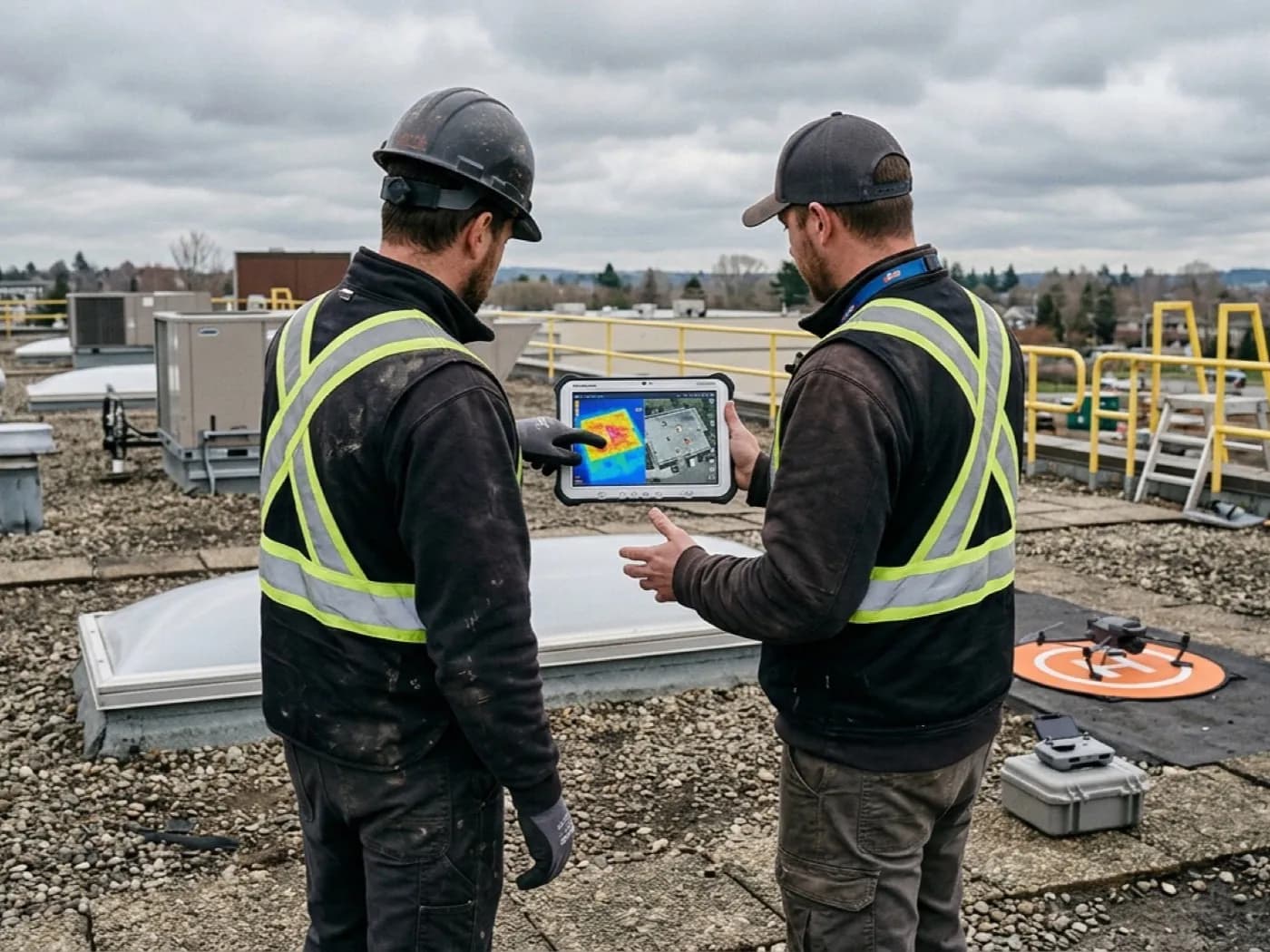
A roofer and a drone operator reviewing a thermal and visual leak trace report together on a tablet at a job site

For Builders and Agents

A dated thermal and visual leak trace your client can book directly, with the report addressed to you, so you are working from evidence rather than a phone call and a guess.

For builders and agents

Credentials

What sits behind the trace

CAA registered

Operator ID and Flyer ID held, plus the A2 Certificate of Competency. Every trace is planned to the rules that apply to the site, and the paperwork is available before the visit if your agent, insurer or a managing agent wants it.

Radiometric thermal

A DJI Mavic 2 Enterprise Advanced carrying a 640 by 512 thermal camera. Water and the material around it hold and release heat differently to a dry roof, which is how a leak gets traced back towards its entry point rather than guessed at from a ceiling stain.

100 megapixel camera

A DJI Mavic 4 Pro with a Hasselblad camera and 6K video, flown alongside the thermal pass. The resolution means a candidate entry point can be shown close up, from a safe standoff distance, without the image falling apart when your roofer zooms in.

Insured with Coverdrone

Full commercial cover for the operation. Certificates go to letting agents, managing agents and insurers as a matter of course, without anyone having to chase for them.

What you get
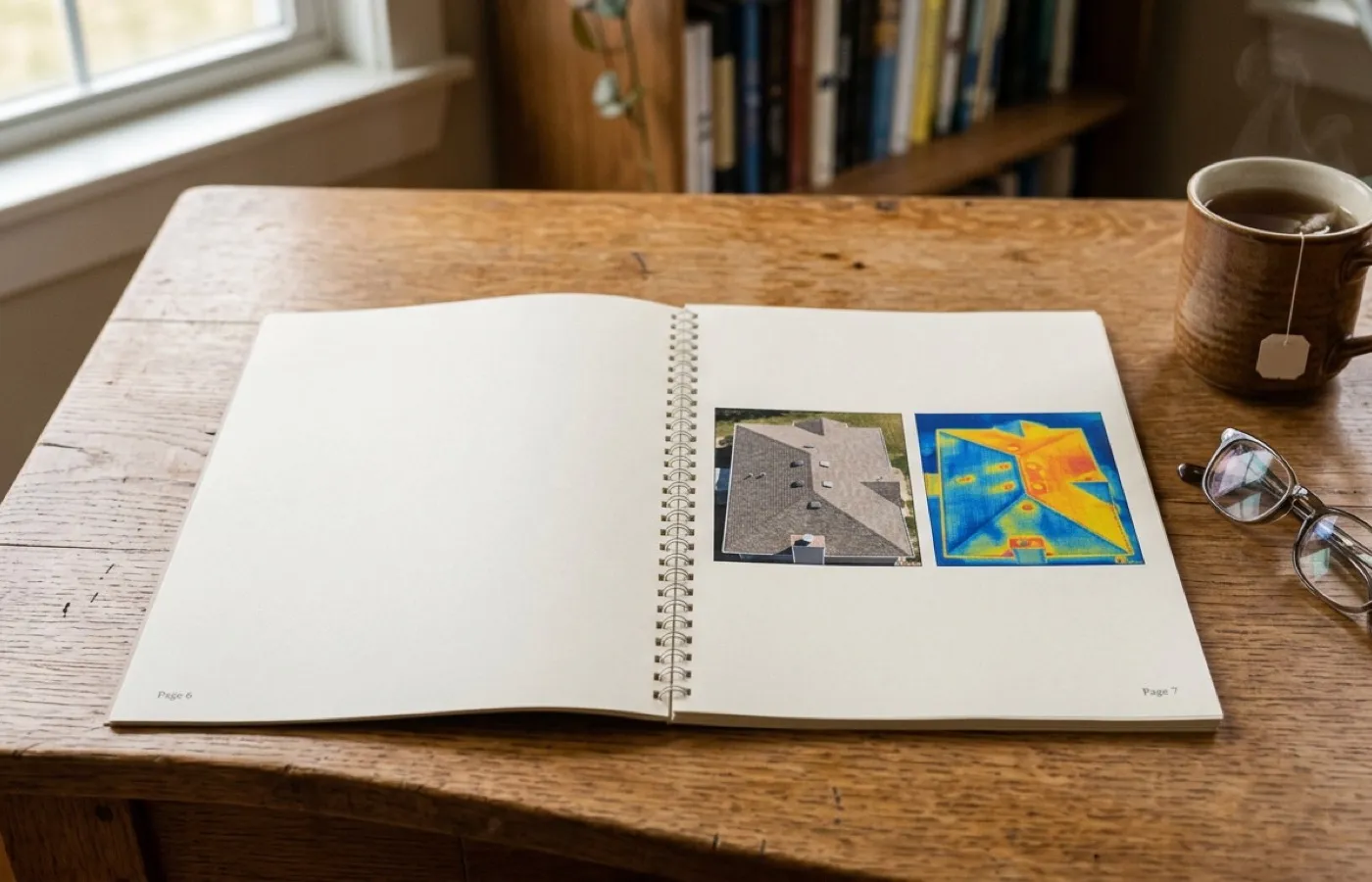
A report your builder can act on without translating it first

The flying is the easy part. The value is in what lands in your inbox 48 hours later.
  • A visual overview of the roof, elevation by elevation
  • A thermal image of the same areas, compared directly against the visual pass
  • A written note on the most likely entry point, or points, and the reasoning behind it
  • Close annotated images of anything found, with a note on where it is
  • The full resolution originals, visual and thermal, so your roofer can look for themselves
  • A clear note on anything the conditions on the day did not allow to be assessed
A printed leak trace report open on a desk, a visual roof photograph and its thermal reading printed side by side, beside a mug of tea

What it looks like

Where a leak actually gets in, and why the stain never shows you

None of these are dramatic on the day they start. All of them have been running for a while by the time anybody notices.
A brown ceiling stain spreading from a corner, the kind of mark that gives no clue where the water actually entered the roof above
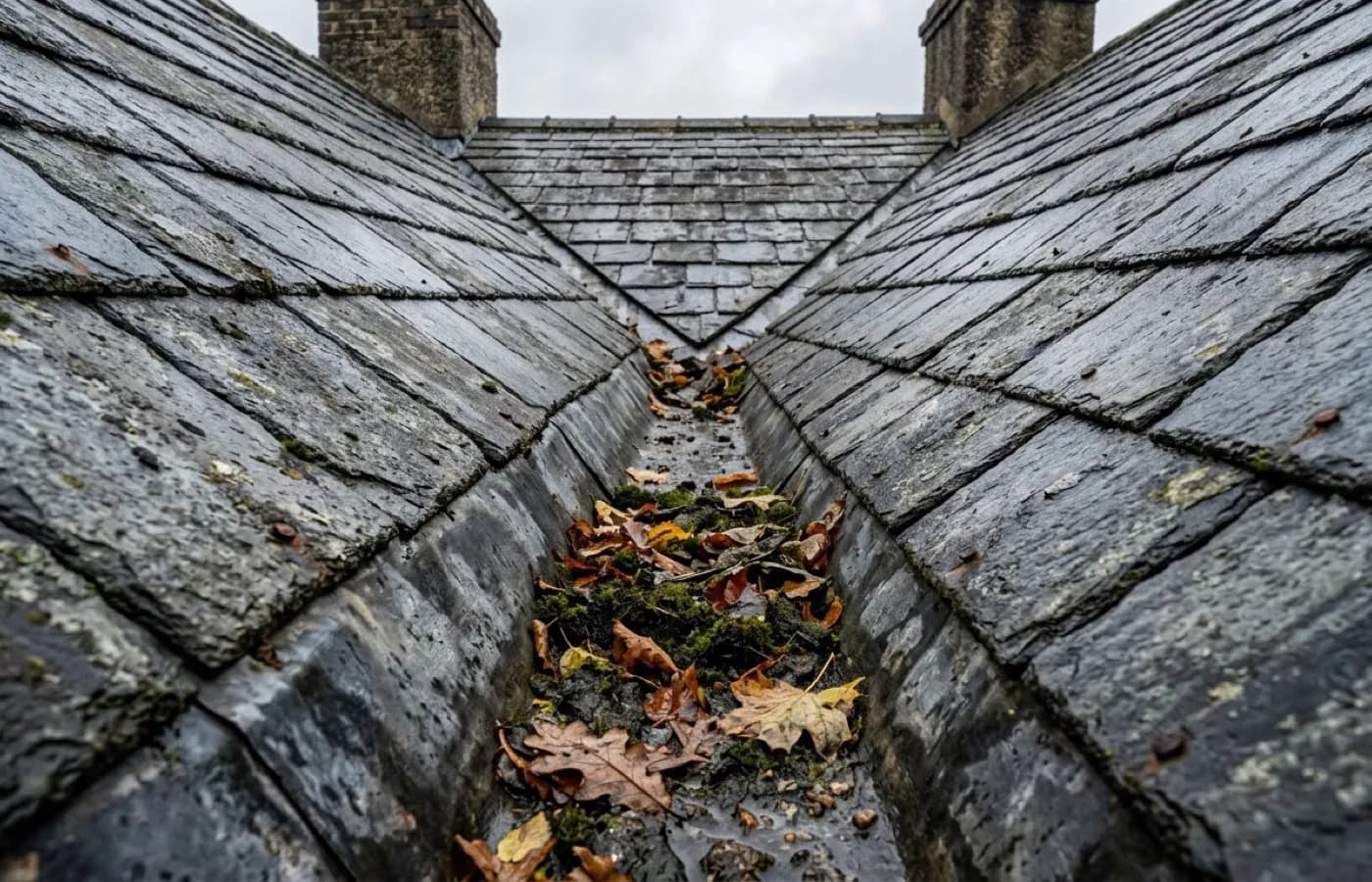
A lead valley gutter between two slate roof slopes, silted with moss and leaf litter where water can back up under the slate unseen
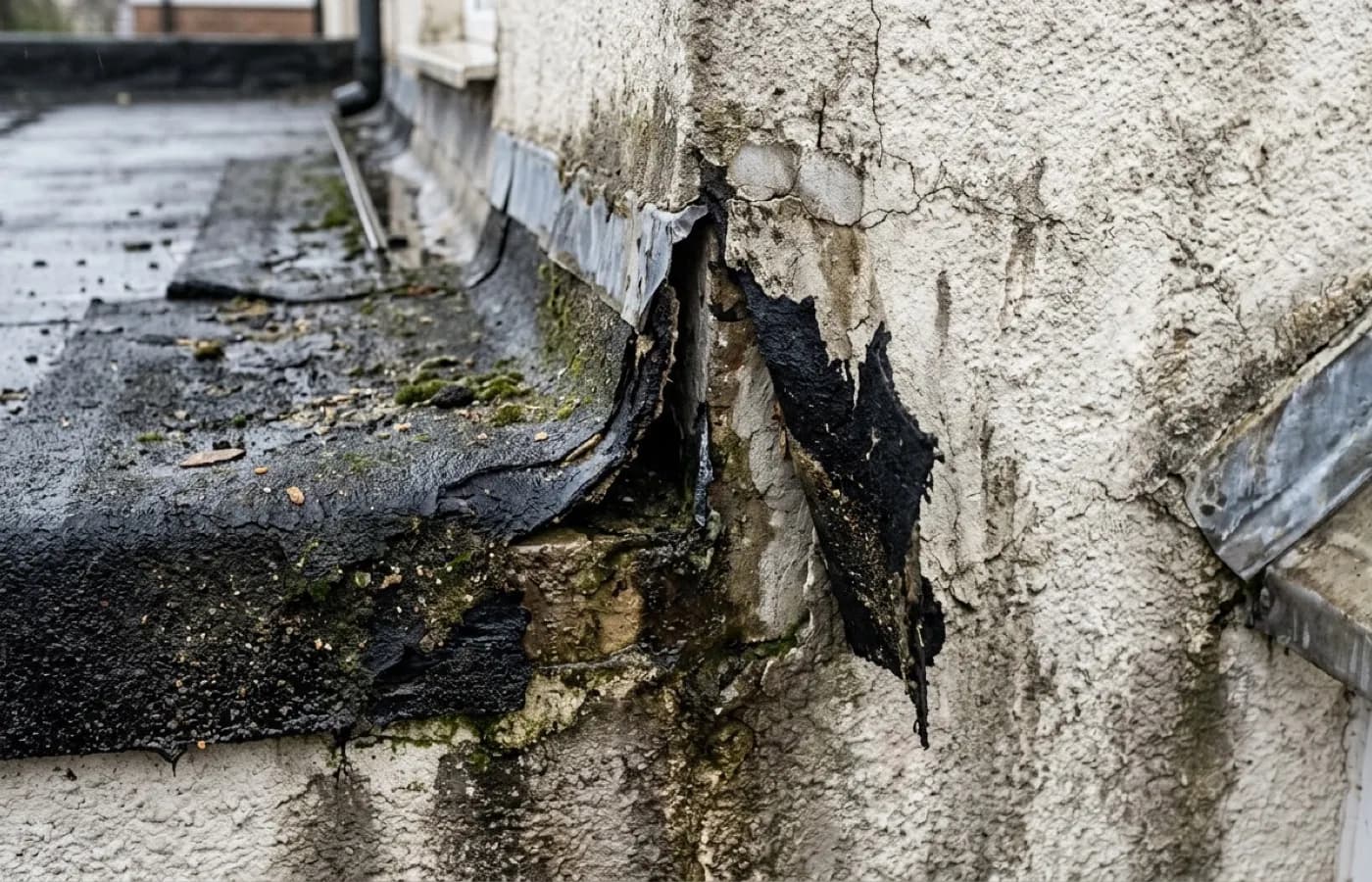
A flat roof upstand where a felt covering meets a wall, a common place for a leak to enter well away from where the stain shows inside
A radiometric thermal image of a roof section rendered in the ironbow colour scale, a warmer patch standing out clearly against the dry surrounding covering

Where we fly

Devon first, then as far as the South West goes

Every town below has its own page, written around the building age and roof style you actually meet there, because a Georgian parapet gutter fails differently to a 1930s valley or a flat-roofed extension.

Questions

Questions we get asked

How does thermal leak tracing actually work?
Water sitting under a roof covering, or the material around it, holds and releases heat differently to dry material nearby. That difference shows up as a temperature pattern on a radiometric thermal camera, flown alongside an ordinary visual camera over the same roof. Comparing the two often narrows a leak down to one area or one detail rather than the whole roof.
Will you definitely find where the leak is coming in?
No survey method can promise that on every roof, and this one is not sold as if it can. Thermal contrast depends on the conditions on the day, how long the leak has been running, and what is under the covering. Where the imagery points clearly at an entry point, the report says so. Where it does not, the report says that too, plainly, rather than guessing.
Does it matter if it has not rained recently?
It helps if it has, because a wet patch reads more clearly on thermal shortly after rain than it does once everything has dried out and settled to the same temperature. If you can book reasonably soon after the leak has shown itself, or after the next rain, the trace has more to work with. It is still worth booking on a dry spell, it is just a different reading.
Do I need to be there?
No. Plenty of traces are flown for landlords, letting agents and managing agents with nobody on site. All that is needed is somewhere lawful to take off and land, and permission to be there. If you want to be present and watch the screen, that is welcome too.
What if the weather turns?
The flight moves. Rain on the lens ruins the imagery and strong wind ruins the stability, so a trace flown in bad conditions is not worth having. Rescheduling for weather costs nothing and is treated as normal rather than as a cancellation.
Can you fly in a terrace or a town centre?
Usually yes. The A2 Certificate of Competency covers flying closer to buildings and people than the basic category allows, which is what makes tight streets workable. Some sites are restricted by airspace or by what is directly below, and that is checked before the booking is confirmed rather than on the day.
What do I actually get at the end?
A written report within 48 hours, with the visual and thermal images side by side, a plain description of what was found and where, and the full resolution originals so your roofer or builder can look at the same evidence themselves.
Is the report enough for an insurance claim?
It gives an insurer or a managing agent dated, photographed and thermal evidence of where the water appears to be entering, which is usually what is asked for first. It is not a loss adjuster's assessment and does not price the repair, and the report says so rather than implying otherwise.
Will you tell me what it costs to fix?
The report describes what was found and how it looks. Pricing the repair is the roofer's job, and the images are there so they can quote from real evidence rather than a ladder, a torch and a guess.
How much does a leak trace cost?
It is a fixed price per trace, agreed before the visit, based on the address and the size of the roof. Send the address and what the leak has been doing and you get the figure back rather than a range.

Find the entry point first

Book a leak trace with Roof Leak Detection

Tell us the address and what the leak is doing. Sam Hembury will come back with a fixed price and the next available slot.

Call 07476 926544Book a leak trace