Devon · EX7
Roof leak detection in Dawlish
Leak tracing in Dawlish, on a storm-battered stretch of coast where cliff-top bungalow estates and a Regency terrace both take unbroken south-easterly gales after every storm season.
A resort split by weather and by roof type
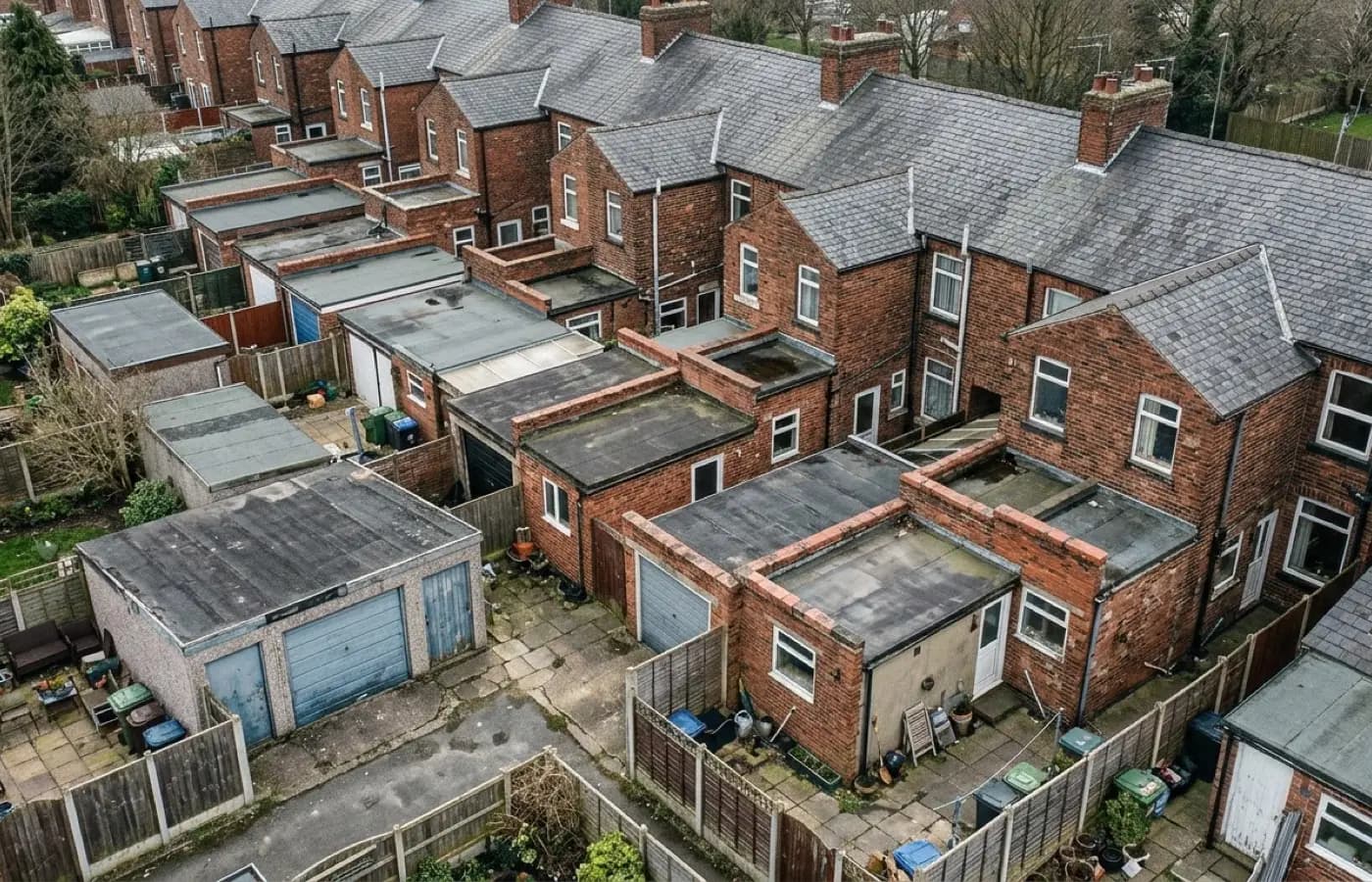
Dawlish sits in a narrow valley cut into red sandstone cliffs, split by Dawlish Water, with Regency and Victorian terraces around The Lawn, seafront hotels and apartment blocks, extensive post-war bungalow development on the cliff tops, and modern estates further inland at Dawlish Warren. Natural slate covers the older terraces, concrete interlocking tile the general housing stock, and flat felt roofs are common on the cliff-top bungalows and their extensions.
The cliff-top bungalow estates are the town's most exposed building type by both position and roof design, a shallow pitch or flat covering sitting directly into the weather with none of the shelter a valley-floor terrace gets from the rising ground around it.
Teignmouth, Exeter, Newton Abbot and Exmouth are all within reach of the same visit, and each has its own page here, written around its own weather, because Dawlish's storm exposure right on the sea wall is sharper than towns only a short way inland actually experience.
Among the most storm-battered coasts this site covers
Dawlish is plainly one of the most storm-exposed places on the South Devon coast: south-easterly gales throw sea water over the sea wall regularly, and the cliff-top bungalow estates take unbroken wind with nothing between them and the Channel. Ridge, verge and flashing failures are common here after a hard storm season in a way that is simply less frequent on a more sheltered inland town.
That exposure means a leak here is often storm-related and recent rather than a slow age-related fault, which changes the useful timing for a trace: booking reasonably soon after a storm, while a damp patch is still actively drying out, tends to give a clearer thermal reading than waiting weeks for the roof to fully settle.
The EX7 postcode area is Dawlish's own, separate from Exeter's despite the shared prefix, and a trace booked anywhere in it faces the same storm-exposed booking logic, whether the roof sits on the cliff top or back in the sheltered valley behind the station.
Cliff-top access, and a railway that shares the exposure
Getting scaffold safely onto some of the more exposed cliff-top plots is itself a weather-dependent job, and a flight faces the same wind constraint but resolves it in an hour rather than losing days waiting for a still enough spell to put a tower up.
The main railway line running along the sea wall at the foot of the town, regularly closed by the same storms that damage roofs here, is a useful local reminder of just how directly this particular stretch of coast takes the weather, and why a post-storm booking is worth prioritising over a routine one.
Dawlish Warren, further along the estuary from the town centre, carries its own newer housing on flatter, more sheltered ground than the cliff-top estates nearer the sea wall, a useful reminder that exposure varies sharply within a few minutes' drive here. A trace is priced and booked the same way wherever in the town the roof sits, a fixed figure agreed before the visit and a written report inside 48 hours.
Behind the trace
What Dawlish clients are actually buying
CAA registered
Operator ID and Flyer ID held, plus the A2 Certificate of Competency. Every trace is planned to the rules that apply to the site, and the paperwork is available before the visit if your agent, insurer or a managing agent wants it.
Radiometric thermal
A DJI Mavic 2 Enterprise Advanced carrying a 640 by 512 thermal camera. Water and the material around it hold and release heat differently to a dry roof, which is how a leak gets traced back towards its entry point rather than guessed at from a ceiling stain.
100 megapixel camera
A DJI Mavic 4 Pro with a Hasselblad camera and 6K video, flown alongside the thermal pass. The resolution means a candidate entry point can be shown close up, from a safe standoff distance, without the image falling apart when your roofer zooms in.
Insured with Coverdrone
Full commercial cover for the operation. Certificates go to letting agents, managing agents and insurers as a matter of course, without anyone having to chase for them.
Nearby
Also covered around Dawlish
- TeignmouthLeak tracing in Teignmouth, the one Devon town this site covers that takes its worst weather from the east, catching seafront details designed only for the south west.
- ExeterLeak tracing across Exeter, from lead-lined Georgian parapets in Southernhay to concrete tiled 1970s estates at Whipton, thermal and visual flown together.
- Newton AbbotLeak tracing in Newton Abbot, across the railway-era Victorian terraces of a low, misty floodplain town where shaded slate holds moss longer than almost anywhere inland.
- ExmouthLeak tracing in Exmouth, across Regency villas on the hillside, inter-war suburbs at Withycombe Raleigh and flat-roofed seafront blocks that take the South West's hardest salt exposure.
Find the entry point first
Book a leak trace in Dawlish
Send the address and what the leak is doing. Sam Hembury will come back with a fixed price and the next slot that suits the weather.